


Bespoke Software - Advantages and potential challenges
Bespoke Software Advantages and Potential Challenges
In a digital landscape where off the shelf solutions are increasingly accessible, the decision between ready made packages and custom built applications remains a pivotal crossroad for many organisations. Bespoke software, defined as a solution specifically tailored to the unique requirements of a single user or business, offers a level of precision that generic platforms often fail to achieve. However, this level of customisation comes with its own set of considerations. This article explores the multifaceted pros and cons of Bespoke software to assist decision makers in navigating their digital transformation journey.
The Advantages of Bespoke Software
The primary driver behind the adoption of custom software is the ability to achieve a perfect fit between the technology and the existing business processes. Unlike commercial software, which often requires a company to alter its internal workflows to suit the application, Bespoke software solutions are designed to wrap around the organisation.
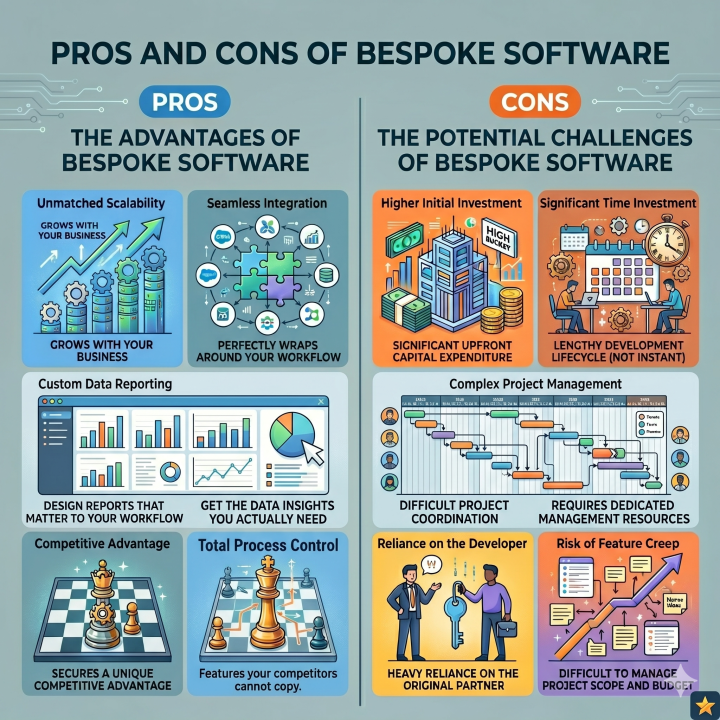
1. Unmatched Scalability and Flexibility
One of the most significant benefits of a Bespoke build is its inherent scalability. As a business grows, its software requirements inevitably evolve, with a Bespoke system, software developers can introduce new features, integrate emerging technologies or expand the capacity of the platform without being restricted by the roadmap of a third party provider. This ensures that the technology remains an asset rather than a bottleneck during periods of rapid expansion.
2. Seamless Integration Capabilities
Most modern enterprises rely on a diverse stack of digital tools. A common frustration with off the shelf software is the difficulty in making disparate systems communicate effectively, Bespoke software is developed with the existing environment in mind, allowing for seamless integration with legacy databases, internal APIs and specific hardware. This interconnectedness reduces manual data entry and minimises the risk of human error across departments.
3. Enhanced Security and Control
Security is a paramount concern for any business, because Bespoke software is not available to the general public, it is naturally less susceptible to mass market hacking attempts that target well known vulnerabilities in popular generic platforms. Furthermore, businesses have total control over the security protocols implemented within the code, ensuring that sensitive data is protected according to the specific compliance standards of their industry.
4. Long Term Cost Efficiency
While the initial investment in custom software is higher than a monthly subscription fee, the long term financial implications can be more favourable. By owning the intellectual property, with full ERP solutions, a business eliminates the need for per user licensing fees. Over several years, especially for large teams, the absence of recurring costs can result in a lower total cost of ownership compared to enterprise level software as a service (SaaS) subscriptions.
5. The Reporting Advantages of Bespoke Software
- Granular Data Access: Since the database is built specifically for your workflows, you can track and report on unique data points that generic software simply doesn't capture.
- Real-Time Dashboards: Bespoke systems can be designed to pull live data into custom visualisations, allowing for immediate decision-making rather than waiting for an end-of-month export.
- Cross-Departmental Insights: You can build reporting modules that bridge different parts of your business (e.g., linking warehouse stock levels directly to sales commission reports) in a way that "boxed" software often struggles to do without complex integrations.
- Automated Compliance: For industries with strict regulatory requirements, Bespoke reporting can be programmed to generate specific, audit-ready documents automatically, saving hundreds of manual hours.
The Potential Drawbacks of Bespoke Software
Despite the clear functional benefits, Bespoke software is not a universal panacea. The complexities involved in building a platform from the ground up introduce risks that must be carefully managed.
1. Higher Initial Capital Expenditure
The most immediate hurdle is the upfront cost. Developing a high quality, bug free application requires a dedicated team of Software Architects, developers and testers. This intensive labour translates into a significant initial outlay which may be difficult for smaller businesses or start-ups to justify when compared to the low entry price of a generic subscription.
2. Significant Time Investment
Unlike off-the-shelf products that can be deployed almost instantly, Bespoke software requires a longer development lifecycle, 16-20 weeks for an entry level solution and up to a year for a full Bespoke ERP solution. The process involves initial consultation, design, coding, rigorous testing and eventual deployment. For companies needing an immediate solution to a pressing operational issue, the months required for custom development might be a prohibitive factor.

3. Reliance on the Development Partner
When a business uses a mainstream software package, there is a global community of experts and alternative providers available for support, with a Bespoke solution, the organisation becomes heavily reliant on the original developer or the internal team that built the code. If the relationship with the development partner sours or if documentation is poor, maintaining and updating the software can become a complex and expensive challenge.
4. The Risk of Feature Creep
Without a rigid project management framework, custom projects can suffer from feature creep. This occurs when stakeholders continually add new requirements during the development phase, leading to delays and budget overruns. Managing the scope of a Bespoke project requires disciplined leadership to ensure the final product remains focused on the primary business objectives, usually set out in a Technical Blueprint.
DID YOU KNOW
80% of consumers are more likely to purchase from brands that offer a personalised experience, which is only achievable through Bespoke platforms.
Choosing between Bespoke software and a generic alternative involves a balance of immediate needs against long term strategic goals. For businesses with unique processes, high security requirements or plans for significant scaling, the investment in a custom solution often provides a competitive edge that generic software cannot replicate. Conversely, for organisations with standard requirements and limited budgets, the speed and affordability of off the shelf products may be more appropriate. Ultimately, the right choice depends on a thorough audit of current pain points and a clear vision for the future of the digital infrastructure.
Deciding on a major tech investment can feel like a high-stakes gamble, so why not contact us now to talk through your specific concerns and see if Bespoke software development UK is truly the right fit for your peace of mind?
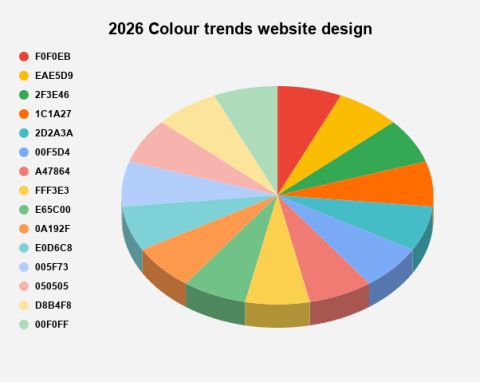
2026 Colours trends for website design
2026 Colour Trends for Website Design Digital spaces are undergoing a prof...
8 min read

Google analytics dropping?
1. Google Analytics The old version of Google Analytics (known as Universa...
5 min read
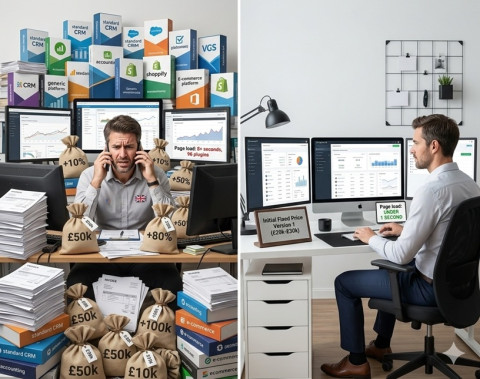
Stop business subscriptions with Bespoke software
Subscription Creep: hidden system costs Many business owners genuinely bel...
7 min read
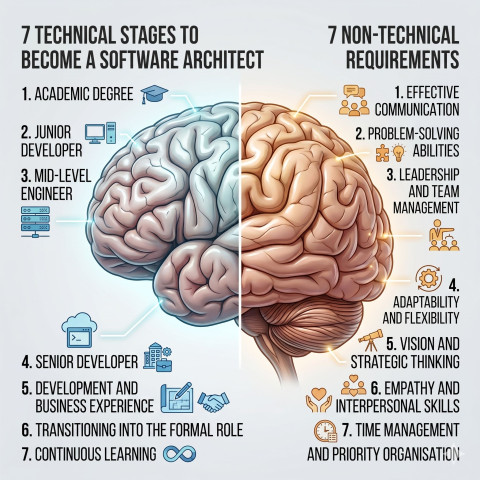
7 Essential Stages to Becoming a Software Architect
7 Essential Stages to Becoming a Software Architect Whether you are upgrad...
6 min read

AI Transcription Software - Definitive Guide Part 1
Contents Evolution Benefits and challenges The top 8 AI Transcription...
5 min read

Trello Alternatives 2025
Top 10 Project Management Alternatives to Trello Favoured by UK Businesses...
6 min read