


Workflow Optimisation - Emerging Trends 2026
Bespoke Software in Workflow Optimisation
Bespoke software, specifically designed to meet the unique needs of businesses, is essential for optimising workflows. By tailoring technology solutions to specific operational challenges, organisations can improve process efficiency, accuracy and response times. In 2026, these bespoke solutions are anticipated to become even more crucial as businesses face increasing complexity and competition.
The Importance of Efficient Workflow Management
Efficient workflow management allows organisations to streamline operations, reduce costs and enhance productivity. By refining how tasks and processes are coordinated, businesses can ensure optimal use of resources, enhance customer satisfaction and gain a competitive edge.
DID YOU KNOW
It is expected that by 2026, UK businesses utilising Bespoke software could see productivity increases of up to 35%. As software becomes more advanced and finely tuned to specific business processes, workflow efficiency is anticipated to improve significantly.
1. Emerging Trends
a. Advanced Automation and Robotic Process Automation (RPA)
Trend Overview: Automation technologies, including RPA, are expected to advance significantly, enabling the automation of complex and repetitive tasks across different industries.
Advanced Automation refers to the use of sophisticated technologies and systems to perform tasks that typically require human intervention, enabling improved efficiency and precision in various operations. Robotic Process Automation (RPA) is a subset of this, where software robots are programmed to mimic human interactions with digital systems to automate repetitive and rule-based tasks, enhancing productivity and reducing the margin for error.
- Bespoke software will increasingly incorporate advanced automation capabilities tailored to specific business needs, automating tasks from data entry to complex decision-making processes.
- Companies will leverage automation to improve accuracy and reduce operational costs, allowing human resources to focus on strategic initiatives.
Impact on Workflows:
Efficiency Gains: Automation reduces the time taken for repetitive tasks, leading to faster processing and increased output.
Example Industries: Financial services for transaction processing; manufacturing for assembly line automation.
Anticipated Challenges: Overcoming resistance to change and ensuring staff are upskilled to work alongside automation technologies.
B. Artificial Intelligence and Machine Learning Integration
Trend Overview: AI and machine learning integration will transform bespoke software by providing predictive analytics and intelligent insights.
Artificial Intelligence (AI) refers to the development of computer systems that can perform tasks typically requiring human intelligence, such as visual perception, speech recognition, decision-making and language translation. Machine Learning (ML), a subset of AI, involves the creation of algorithms that enable systems to learn from and make decisions based on data. The integration of AI and ML allows these systems to continuously improve their performance by learning from new information, leading to more efficient and accurate predictions or actions over time.
- AI will enable dynamic workflow management, predicting changes in demand or resource availability and automatically adjusting processes accordingly.
- Machine learning will facilitate better decision-making through data-driven insights, enhancing the ability to anticipate market trends and operational needs.
Impact on Workflows:
Personalised Operations: AI can tailor workflows to individual user needs, improving speed and accuracy.
Example Usage: Retail for customer personalisation; healthcare for predictive patient management.
Anticipated Challenges: Ensuring data privacy and overcoming potential biases in AI algorithms.

C. Cloud-Native Solutions for Scalability and Flexibility
Trend Overview: Cloud-native architectures will become the norm, offering scalable solutions that can be adapted quickly to meet fluctuating business demands.
Cloud-native solutions are designed to leverage the full potential of cloud computing, offering unparalleled scalability and flexibility for modern applications. By utilising microservices architecture, containerisation and continuous delivery, these solutions enable businesses to efficiently scale their operations in response to demand fluctuations and seamlessly adapt to evolving market conditions. This approach not only improves resource utilisation but also accelerates innovation and time-to-market for new features and services.
- Cloud platforms will allow for the seamless expansion of services and capabilities without the need for significant infrastructure investments.
- The ability to deploy solutions rapidly in a cloud environment will facilitate faster innovation and responsive adaptation to market changes.
Impact on Workflows:
Improved Collaboration: Cloud solutions enable global teams to work synchronously and effectively, regardless of location.
Example Usage: Global enterprises managing distributed teams; tech companies hosting applications.
Anticipated Challenges: Addressing data sovereignty issues and ensuring robust security measures are in place to protect sensitive information.
D. Blockchain for Enhanced Workflow Security and Transparency
Trend Overview: Blockchain is set to influence workflow optimisation by increasing security and transparency, especially where integrity is critical.
Blockchain technology is revolutionising workflow optimisation by enhancing both security and transparency. It acts as a reliable digital ledger, ensuring that each step in a process is both clear and unalterable, a crucial factor where integrity is paramount. This ensures that all transactions are transparent and secure, eliminating any risks of unauthorised changes and fostering more efficient and trustworthy collaboration.
- By using distributed ledger technology, blockchain ensures that data within workflows remains secure, verifiable and resistant to tampering.
- Smart contracts will automate the execution of agreements, ensuring that conditions are met before executing transactions.
Impact on Workflows:
Increased Trust: Blockchain can be used to guarantee the authenticity of transactions, vital for sectors such as finance or supply chain management.
Example Usage: Insurance claims processing; supply chain visibility.
Anticipated Challenges: Understanding the complexities of blockchain technology and integrating it with existing systems.
E. Low-Code/No-Code Development for Agile Workflow Customisation
Trend Overview: Development platforms that require minimal coding will empower businesses to create bespoke applications quickly and efficiently.
Low-Code/No-Code development refers to platforms that allow users to create and customise software applications with minimal hand-coding. These tools typically use visual interfaces and drag-and-drop components, making them accessible to non-programmers. In the context of agile workflow customisation, these platforms enable rapid prototyping and iteration, allowing teams to quickly adapt to changing requirements and enhance productivity. By streamlining the development process, Low-Code/No-Code solutions support the agile methodology's focus on flexibility, collaboration and continuous improvement.
- These platforms will democratise software development, allowing non-technical users to customise workflows and applications to meet their specific needs promptly.
- Low-code/no-code solutions will bridge the gap between complex programming and business-specific requirements, ensuring faster deployment and iteration.
Impact on Workflows:
Rapid Development and Deployment: Enables faster rollout of tailored workflow enhancements and adjustments as needs evolve.
Example Usage: Marketing departments developing custom campaign management tools; HR teams building unique employee portals.
Anticipated Challenges: Ensuring the platform’s flexibility can meet all organisational requirements without compromising on quality or security.
For further info go to: bespokeuk.com/posts/what-is-the-agile-development-model
2. Challenges and Considerations
a. Navigating Initial Investments
- While initial costs might be high, the long-term benefits in efficiency, innovation and cost savings generally outweigh the upfront expenses.
DID YOU KNOW
Investing in Bespoke software is projected to offer long-term value in 2026, with 85% of UK businesses expected to report sustained benefits from their investment. The scalability and adaptability of custom solutions ensure that businesses continue to derive substantial value over time.
B. Integration with Existing Infrastructure
- Seamless integration with legacy systems and current processes will be essential to realise the full potential of bespoke solutions, demanding careful planning and execution.
For further info go to: bespokeuk.com/posts/the-hidden-cost-of-poor-system-integration
For further info go to: bespokeuk.com/posts/roadmap-to-integrate-bespoke-software-into-your-existing-systems
3. The Outlook for Bespoke Software in Workflow Optimisation
The integration of advanced technologies into bespoke software will create transformative opportunities for workflow optimisation, ensuring businesses can operate more efficiently and effectively.
a. Key Takeaways
- Tailored solutions leveraging automation, AI and cloud capabilities are set to redefine workflow management.
- Organisations adopting these trends stand to gain substantial advantages in efficiency, scalability and adaptability.
Bespoke Software is what we DO!
WORKFLOW OPTIMISATION is what we DO!
Contact us now and find out how our specialised team can HELP you OPTIMISE YOUR business WORKFLOWUSING our UNIQUE Bespoke Software, created by US, personalised to you by US and maintained by US.
bespokeuk.com/contact

2026 Colours trends for website design
2026 Colour Trends for Website Design Digital spaces are undergoing a prof...
8 min read

Google analytics dropping?
1. Google Analytics The old version of Google Analytics (known as Universa...
5 min read

Stop business subscriptions with Bespoke software
Subscription Creep: hidden system costs Many business owners genuinely bel...
7 min read
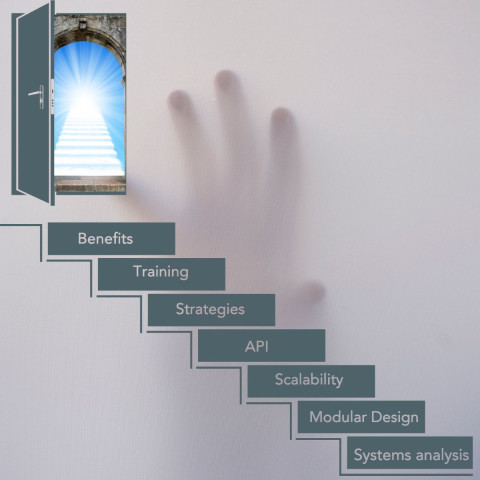
Is integrating systems into Bespoke software scaring you?
Navigating the Integration Journey: A Strategic Evolution As businesses em...
3 min read

How to fix a slow loading website
How to Fix a slow loading website A slow loading website is the digi...
4 min read

Booking & Scheduling Bespoke Software - A complete guide
The Ultimate Guide to Bespoke Booking & Scheduling Software Time is one of...
4 min read