


E-commerce Design strategies for 2026 success
Ecommerce Design strategies for 2026 Success
To achieve Ecommerce success in 2026, design strategies should be implemented. Brands must pivot to a mobile dominant reality where 87% of the UK population now shops online. Success this year is defined by "thumb-driven" ergonomics and AI-integrated interfaces that cater to the 62 million shoppers demanding instant, one handed navigation. In a landscape where users judge your site in just 30 milliseconds, your design strategy must prioritise psychological speed over traditional aesthetics.
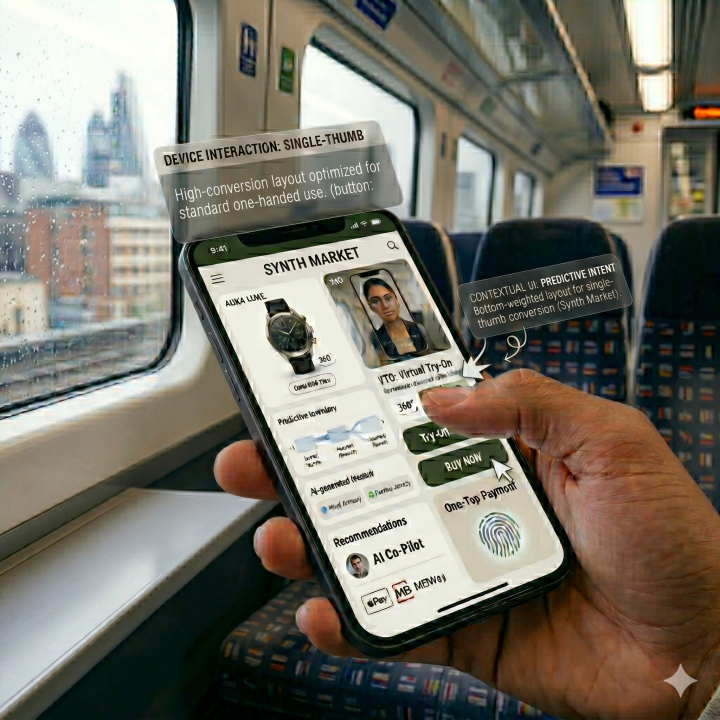
1. Mastering the Human Hand Thumb-Led UI
Most shoppers in the UK now browse using one hand while commuting or multitasking. In 2026, the biggest ecommerce design strategies are moving away from simple visuals toward deep, AI-driven experiences. You must consider how easily a thumb can reach your "Buy" button. Move your primary navigation and checkout triggers to the bottom third of the screen to reduce physical strain.
2. Implement Bento Grid Layouts
The "Bento" style, organising content into clean, rounded rectangular tiles, is the layout strategies for 2026. It organises product details (price, reviews and specs) into a scannable grid, helping customers process information 40% faster.
3. Leverage Immersive AR Visualisation
Cut down on costly returns by letting customers "try before they buy." Whether it’s seeing how a sofa looks in a London flat or virtually trying on a pair of trainers, Augmented Reality (AR) provides the confidence needed to hit the purchase button.
DID YOU KNOW
Smartphones are now driving 60% of all sales in the UK
4. Prioritise One-Tap Biometric Checkouts
Friction is the enemy of sales and growth. 2026 will see manually entering credit card details as a chore. Integrating Apple Pay, Google Pay and biometric (FaceID/Fingerprint) authentication ensures that the moment of impulse isn't lost to a tedious form.
5. Switch to Conversational Semantic Search
Ditch the basic search bar for an AI-driven conversational interface. Instead of searching for "black boots," users can type "durable footwear for a wet Welsh winter." Understanding the intent behind the search leads to more accurate results and higher sales.
6. Utilise Dynamic Scrollytelling
Static product pages are being replaced by Scrolly Telling. As the user scrolls, the product should animate or deconstruct to show its features, this keeps potential buyers on your page longer, which is a massive positive signal for SEO rankings and current strategies
Devices used to access the web in the UK Comparison 2024 vs 2026
| Device Category | Previous (approx. 2024) | New (May 2026) | Trend |
| Smartphones | 47% | 53.9% | 📈 Increasing |
| Laptops / PCs | 47% | 42.1% | 📉 Decreasing |
| Tablets | 4% | 3.0% | 📉 Decreasing |
| Other (Smart TV/IoT) | 0.9% | 1.0% | 📈 Increasing |
7. Hyper-Personalisation
In 2026, your homepage should look different for every visitor. Use real-time data to show waterproof jackets to someone in a rainy Manchester and sun cream to someone in a heatwave in Kent. Relevance is the quickest shortcut to a conversion.
8. Focus on Radical Supply Chain Transparency
Consumers value ethics. Design your product pages to show the Carbon Footprint and Factory of Origin clearly. Transparency isn't just a strategic, it builds the trust required for long-term brand loyalty.
9. Design for Agentic Commerce (AI Bots)
Optimise your site’s Backend for AI shopping assistants. By using clean Schema Markup, you ensure that when a customer asks their AI assistant to "find the best price for organic tea," your website is the one the bot recommends.
2026 Comparison Table why users leave a website
| Metric | Previous (circa 2022-2024) | 2026 Update |
| Abandonment due to UX/Function | 42% | 54% |
| First Impression Speed | 500ms (0.5s) | 30–50ms (0.03s) |
| Mobile Load Time Expectation | 2.0 Seconds | 1.2 Seconds |
10. Speed Up with Edge Computing and Clean Code
Page speed is still a kingmaker for SEO. Use 2026 Edge technology to serve your website from the server closest to the user. A site that loads in under a second feels premium and professional, significantly lowering your bounce rate.
2026 E-commerce Strategy Comparison Table
| Old Strategy (2020-2024) | 2026 ROI Strategy | Benefit |
| Mobile-First (Top Menus) | Thumb-Led (Bottom Menus) | Better Reachability |
| Text-Heavy Descriptions | Bento Grid Modules | Faster Understanding |
| Static Images | AR & 3D Models | Fewer Returns |
| Search Keywords | Semantic AI Search | Better Result Matching |
| Manual Data Entry | Biometric One-Tap | Faster Conversion |
The blueprint for Ecommerce Design strategies for 2026 Success lies in the total elimination of digital friction. By moving critical checkout triggers into the "Thumb Zone" and utilising predictive AI, businesses can capture a market where over half of all web access is now smartphone led. Ultimately, 2026 success belongs to the platforms that transform complex shopping journeys into effortless, split second interactions for the modern, multitasking consumer.
Boost your sales with the UK’s best high-speed ecommerce solutions. Contact our experts today to start growing your business.
https://bespokeuk.com/contact
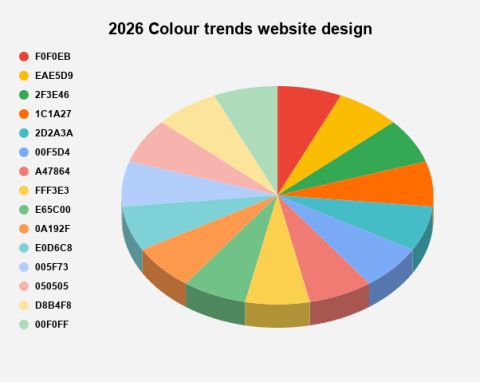
2026 Colours trends for website design
2026 Colour Trends for Website Design Digital spaces are undergoing a prof...
8 min read

Google analytics dropping?
1. Google Analytics The old version of Google Analytics (known as Universa...
5 min read
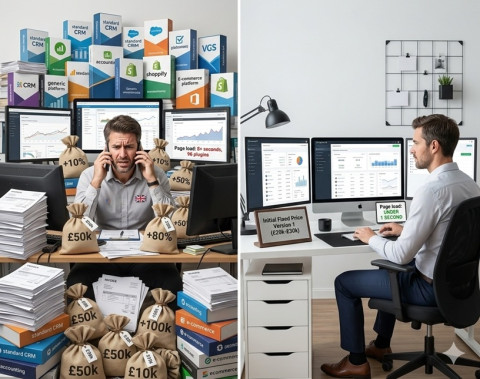
Stop business subscriptions with Bespoke software
Subscription Creep: hidden system costs Many business owners genuinely bel...
7 min read

Bespoke software for business growth
bespoke software for business growth Choosing Bespoke software is like bui...
3 min read

How to fix a slow loading website
How to Fix a slow loading website A slow loading website is the digi...
4 min read

How does AI boost SEO in Web Development?
In today's digital landscape, web development and Search Engine Optimisatio...
4 min read