


E-Commerce Bespoke Software - A complete guide
In today’s competitive digital landscape, success in retail and services hinges on one critical factor: the ability to deliver seamless, efficient and personalised shopping experiences. A Bespoke E-commerce software solution provides the tools and flexibility to achieve exactly that.
Here’s a complete guide that explores what E-commerce systems are, why businesses need them, the types available and how to implement one successfully.
Read our free article about E-commerce Trends 2026: bespokeuk.com/posts/ecommerce-design-strategies-for-2026-success
1. What is an E-commerce System?
An E-commerce system is more than just an online shopfront, it’s a powerful platform that manages every aspect of digital trade, from customer accounts and product catalogues to transactions, stock control and fulfilment. Unlike generic solutions, custom Ecommerce platforms are designed to consolidate and streamline these processes, providing a centralised system tailored to your unique workflows.
By moving beyond spreadsheets, disconnected apps or bolt-on plug-ins, businesses can achieve greater efficiency, accuracy and customer satisfaction.
2. Why Use an E-commerce System?
As your business grows, so too does the complexity of managing orders, stock, payments and customer data. A purpose built E-comm solution simplifies these processes and introduces automation, allowing staff to focus on growth rather than admin.
a. General Contact Management
- Store and manage customer profiles in one place.
- Track interactions, purchase history and preferences.
b. Sales Management
- Manage the entire order lifecycle, from product selection to delivery.
- Automate repetitive tasks such as invoicing and stock allocation.
c. Marketing
- Run targeted campaigns across email, social media and search.
- Segment customers to deliver tailored offers.
d. Customer Service
- Enable customers to raise service requests directly through portals.
- Integrate AI-powered chatbots for instant responses.
e. Analytics and Reporting
- Transform raw customer and sales data into actionable insights.
- Support better decision making with real time dashboards.
DID YOU KNOW
More than 70% of UK E-commerce traffic comes from smartphones, making mobile-first design essential for any online retailer.
3. Types of E-commerce
Not all systems are created equal. Broadly, E commerce platforms can be grouped into three categories:
a. Operational E-commerce: Streamlines processes such as inventory, logistics and order management.
b. Analytical Ecommerce: Uses data mining, AI and predictive analytics to forecast trends and understand customer behaviour.
c. Collaborative E commerce: Enhances communication between teams, suppliers and customers, ensuring smoother operations.
4. How E-commerce Systems Work
Modern E-commerce systems consolidate data from multiple touchpoints, websites, apps, email, social media and even in-store transactions, into a central database.
- Sales Teams: Track and optimise order pipelines.
- Marketing Teams: Personalise campaigns and target offers.
- Customer Service Teams: Resolve issues quickly and keep satisfaction high.
This unified approach ensures consistency and accuracy across your business.
5. Bespoke E-commerce software Systems
While off-the-shelf platforms work for some, many UK businesses benefit from Bespoke Software Development, which provides:
- Unique Workflows: Built specifically for your operations.
- Integration Needs: Seamless connection with ERP, WMS and finance systems.
- Data Analytics: Tailored dashboards and insights.
- Scalability: Flexibility to grow with your business.
- User Experience: Custom interfaces that drive adoption.
- Cost Implications: Higher upfront investment but long-term savings through efficiency.
6. Choosing the Right E-commerce System
When selecting or commissioning an E-commerce platform, keep these points in mind:
- Define your business requirements clearly.
- Involve end users to ensure usability.
- Check integration capabilities with your existing systems.
- Balance budget considerations with long term value.
- Build in methods to ensure your basket does not get abandoned. See our free article on basket abandonment: bespokeuk.com/posts/e-commerce-basket-abandonment-causes-effects-and-solutions
DID YOU KNOW
The UK has one of the world’s highest online shopping penetrations, with around 27% of all retail sales now taking place online — more than most European neighbours.
7. Benefits of a custom Ecommerce Solutions
Choosing a tailored solution offers measurable advantages:
- Customisation: Designed to fit your processes exactly.
- Integration: Connects seamlessly with finance, logistics and CRM systems.
- Long-term Cost Efficiency: Avoids paying for unnecessary licences or features.
- Scalability: Grows with your business.
- Enhanced User Experience: Improves adoption and customer satisfaction.
- Unique Features: Gives you a competitive edge.
- Improved Reporting: Delivers insights that matter to you.
- Data Security: Meets strict compliance and industry specific standards.
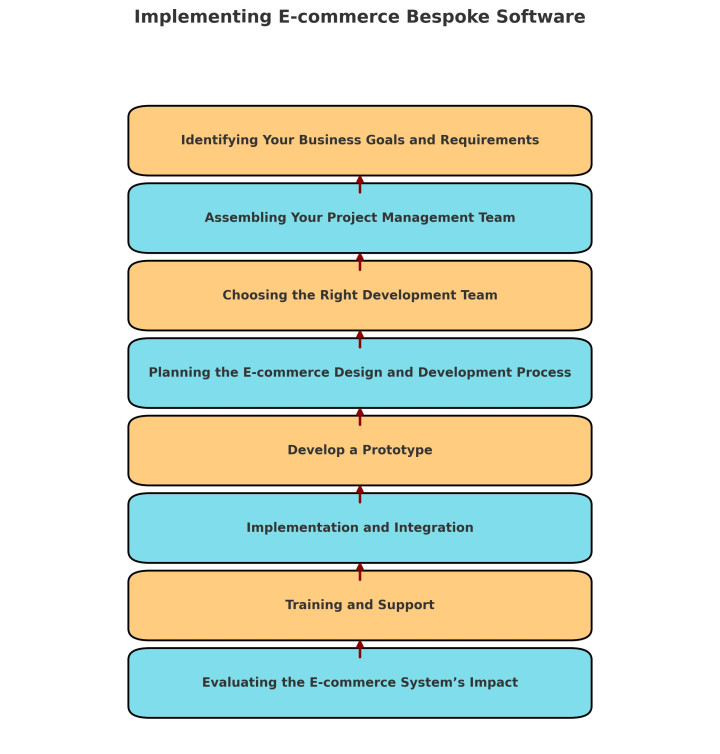
8. Implementing an E-commerce System
Implementing a new system can be daunting but following these steps ensures success:
a. Identifying Your Business Goals and Requirements
Define clear objectives and map out how the system will meet them.
b. Assembling Your Project Management Team
Bring together experts in design, development and management to steer the project.
c. Choosing the Right Development Team
Select developers who understand both technology and business management.
d. Planning the Ecommerce Design and Development Process
Set milestones, timelines and ensure collaboration between analysts, designers and developers.
f. Develop a Prototype
Test functionality constantly, preferably using the Agile Project Methology and gather user feedback to refine the design.
g. Implementation and Integration
Deploy the system carefully, ensuring smooth integration with existing tools.
h. Training and Support
Find a Bespoke software development company who's solutions do not require a lot of staff training and ensure they offer go live support.
i. Evaluating the E-commerce System’s Impact
Assess the system’s performance against your objectives and adapt as needed.
E-commerce systems have evolved from simple online shops into enterprise-grade platforms that power modern digital businesses. A Custom E-commerce solution gives you the agility to scale, the tools to compete and the intelligence to serve your customers better.
Whether you’re a growing SME or an established enterprise, the right system can be the difference between surviving and thriving in today’s marketplace.
Bespoke E-Commerce Software - that is what we DO!
Contact us now and find out how our highly trained team can solve your business issues USING our exceptional proprietry Bespoke Software, created by US, personalised to you, maintained by US.
bespokeuk.com/contact
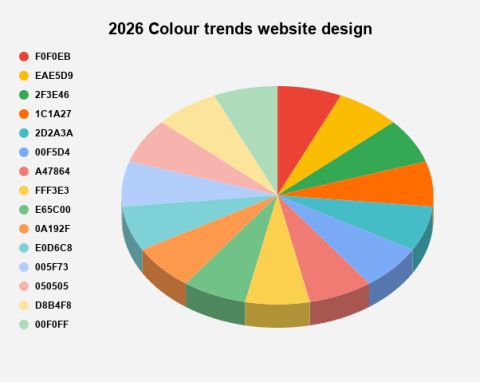
2026 Colours trends for website design
2026 Colour Trends for Website Design Digital spaces are undergoing a prof...
8 min read

Google analytics dropping?
1. Google Analytics The old version of Google Analytics (known as Universa...
5 min read

Stop business subscriptions with Bespoke software
Subscription Creep: hidden system costs Many business owners genuinely bel...
7 min read

Seamless Integration: Bespoke Software And Legacy Systems
Seamless Integration: connecting Bespoke Software with Your Tech Stack In...
4 min read

E-commerce Design strategies for 2026 success
Ecommerce Design strategies for 2026 Success To achieve Ecommerce success...
4 min read

Forecasting the Future: Exciting Website Design Trends for 2024
As we move through 2024 the digital landscape continues to evolve, bringing...
22 min read